Annual air conditioner servicing: what the technician checks, step by step

The EcoClimo team
6 Oct 2026 - 04 min read
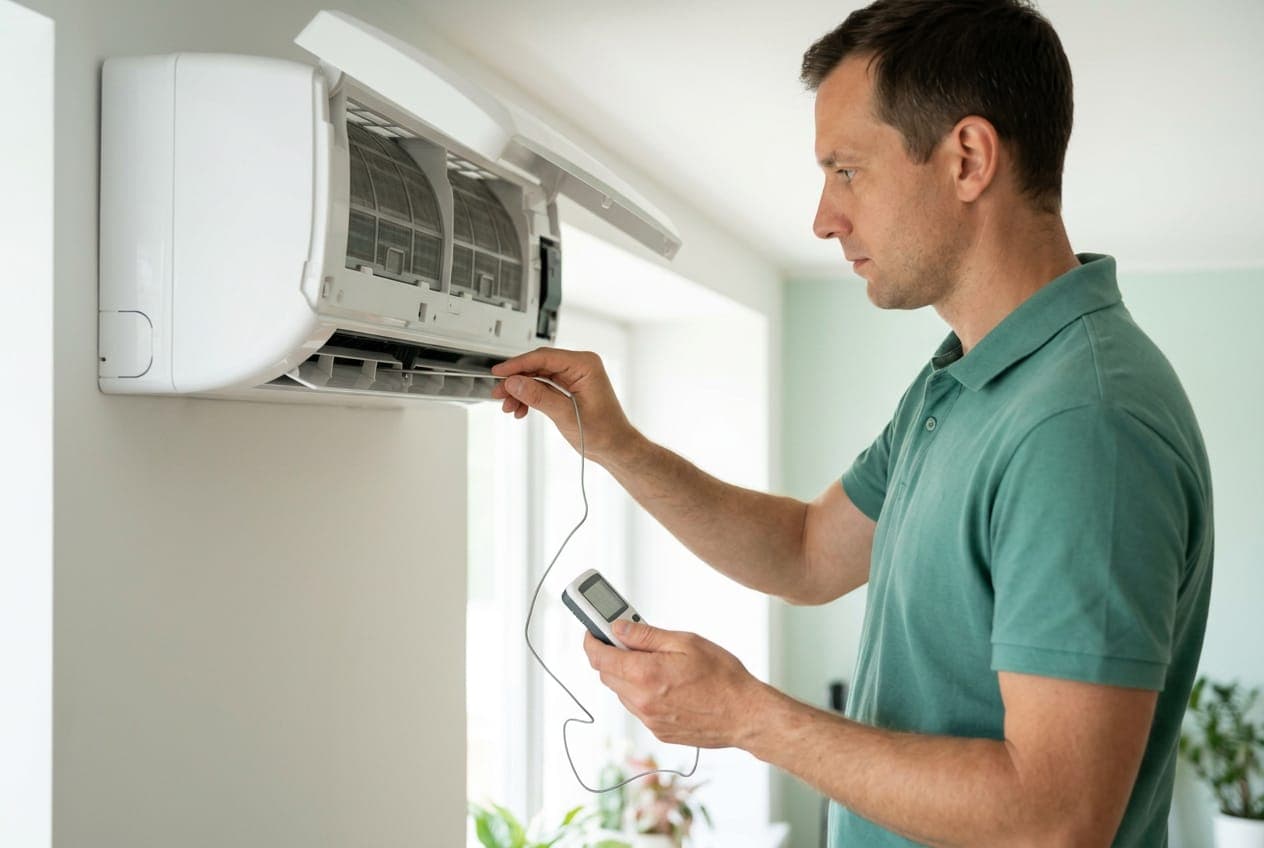
An air conditioner that starts up and blows cool air tells you very little about its actual condition. It can keep running while using more electricity, circulating dusty air or slowly losing refrigerant. A service visit exists precisely to spot what you would not notice day to day.
Even so, many homeowners and tenants wonder what actually happens during the hour the technician spends in their home. Here is how a thorough visit unfolds, the reason behind each step, and how to read the written report you receive at the end.
Before opening the unit: listening and observing
The visit begins with a few questions. When was the unit installed? Was it used for heating last winter? Have you noticed a noise, a smell or any dripping? This information points the diagnosis in the right direction far faster than taking things apart blindly.
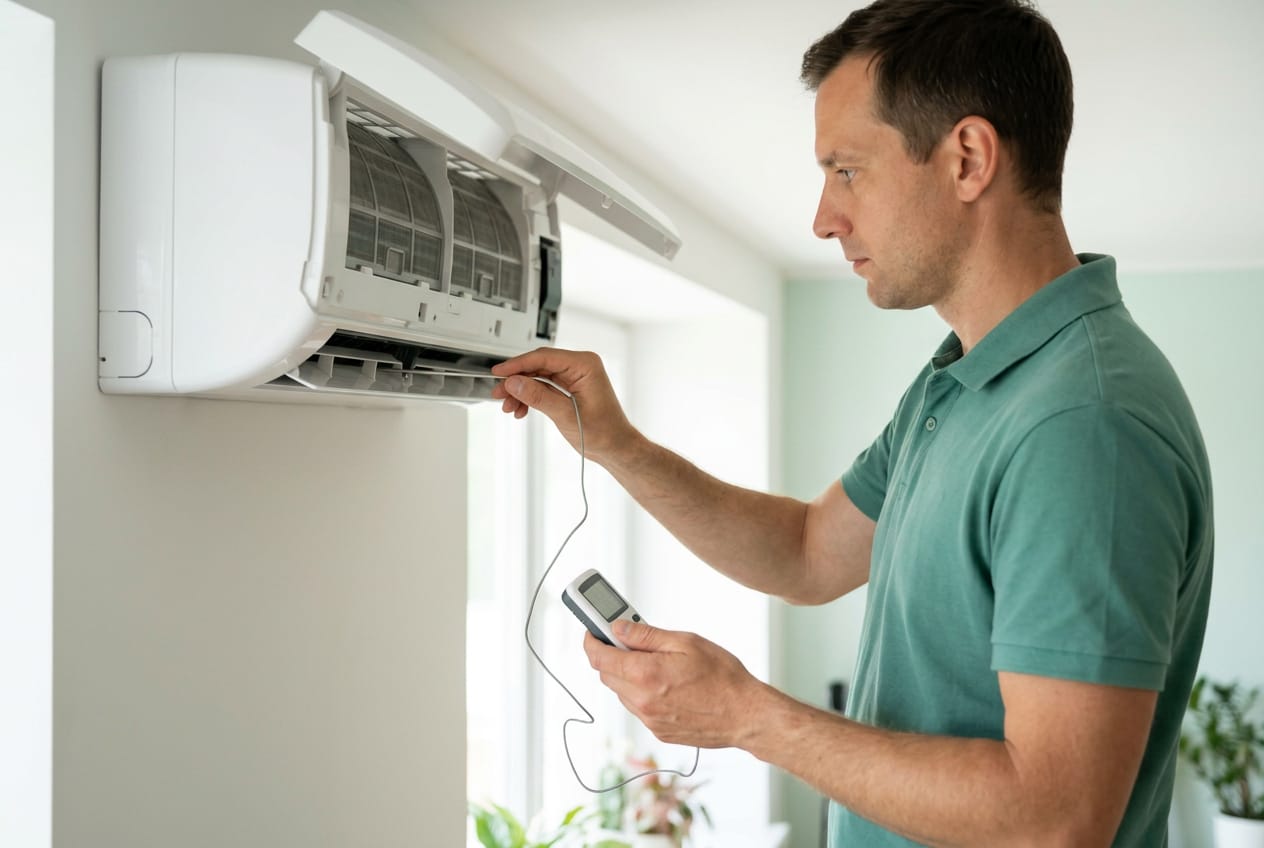
The technician then switches the air conditioner on to watch it in normal operation: start-up, fan noise, louvre movement, response to the remote control. Any fault spotted at this stage is checked in more detail later, rather than being discovered by chance at the end of the visit.
Cleaning the indoor unit
This is the most visible part of the job, and the one with the greatest effect on the air you breathe.
The filters
Filters trap dust, pet hair and some of the pollen. When they are clogged, the fan has to work harder to push air through, airflow drops and the unit runs longer to reach the set temperature. The technician removes them, washes them, checks their condition and replaces them if they are torn or misshapen.
The coil and the fan
Behind the filters sits the coil, a block of very thin metal fins. In cooling mode, moisture from the air condenses on it, creating a damp environment where mould and bacteria can grow. It is cleaned with a suitable product, then disinfected. The blower wheel, the bladed cylinder that pushes air into the room, is cleaned too: a greasy or dusty wheel blows its deposits straight into the room and can become unbalanced.
The condensate tray and drain
Water from condensation drips into a tray, then runs away through a pipe, sometimes helped by a small pump. The technician checks that the water drains freely, clears the line if needed and tests the pump where there is one. A sluggish drain is the most common cause of drips under the unit and of certain smells.
Checking the outdoor unit
The outdoor unit, on a balcony, a terrace or a wall, collects pollution, leaves and sometimes insect nests. Its coil must stay clear to reject heat in summer and absorb it in winter. The technician cleans it, checks that air can circulate freely around the unit, inspects the mountings and brackets, the pipework and its insulation, and makes sure the fan runs properly.
They also look over the accessible electrical connections: a loose terminal or a sign of overheating is easy to fix today and avoids a more expensive breakdown tomorrow.
Readings: what separates servicing from a simple clean
Cleaning alone does not tell you whether the unit is working properly. The readings taken during the visit make it possible to compare its behaviour from one year to the next.
| Check | What it reveals |
|---|---|
| Return air and supply air temperature | The unit's real ability to cool or heat |
| Circuit pressures, where needed | An abnormal refrigerant charge or a circuit fault |
| Electrical current drawn | A component under strain or unusual consumption |
| Leak search on the joints | A loss of refrigerant, even a slow one |
| Sensors and remote control | Controls that no longer hold the set point |
The difference between the temperature of the air drawn in and the air blown out is a simple, telling indicator. If it shrinks noticeably from one visit to the next, something has changed: dirt build-up, low refrigerant or a failing component. Between visits, an indoor thermometer and hygrometer also helps you check that the room stays at a comfortable temperature and humidity.
The refrigerant circuit is a sealed system: a unit in good condition should not need "topping up". Only a technician holding the refrigerant handling certificate (attestation de capacité) may work on the refrigerant, and every such intervention is recorded on a service sheet. For systems above a certain threshold, expressed in tonnes of CO2 equivalent, the European F-Gas Regulation also requires a periodic leak check.
What the written report tells you
At the end of the visit, you receive a written report. It is worth reading and keeping. It usually includes:
- the unit's details: make, model, refrigerant type and the charge shown on the rating plate;
- the work carried out on each indoor and outdoor unit;
- the readings taken, which will serve as a reference next year;
- the findings: wear, faults, items to keep an eye on;
- advice on use and, where relevant, a separately priced repair recommendation.
This document is useful beyond the visit itself. It proves the unit has been serviced, which can matter for the manufacturer's warranty or when selling a property. It also makes life easier for the next technician, who does not have to start from scratch.
At EcoClimo, each unit is then logged in our active vigilance follow-up: we get back in touch before the next season, and before any regulatory leak check falls due. There is nothing for you to remember.
Between visits: good habits
Annual servicing does not replace a few simple habits, especially if the unit runs a lot:
- Dust the filters every few weeks during the season, with a vacuum cleaner or lukewarm water, and let them dry before refitting them.
- Keep the outdoor unit clear: no plant pots, covers or stored items leaning against it.
- Note any change in behaviour (noise, smell, water) so you can mention it at the next visit.
For the filters, an air conditioner filter cleaner can complement rinsing with water. Avoid spraying products on the coil or opening the casing, however: deep cleaning and anything involving the circuit are a job for the technician.
Is your home or your shop fitted with an air conditioner that has not been looked at for more than a year? Our air conditioner servicing and cleaning comes at an upfront price: €130 including VAT for one indoor and one outdoor unit, with no call-out charge anywhere in Île-de-France. Pick your slot directly on the booking page.
Ready for cooler, healthier air?