Noise, smells, dripping water: the signs that an air conditioner needs servicing or a repair

The EcoClimo team
22 Oct 2026 - 04 min read
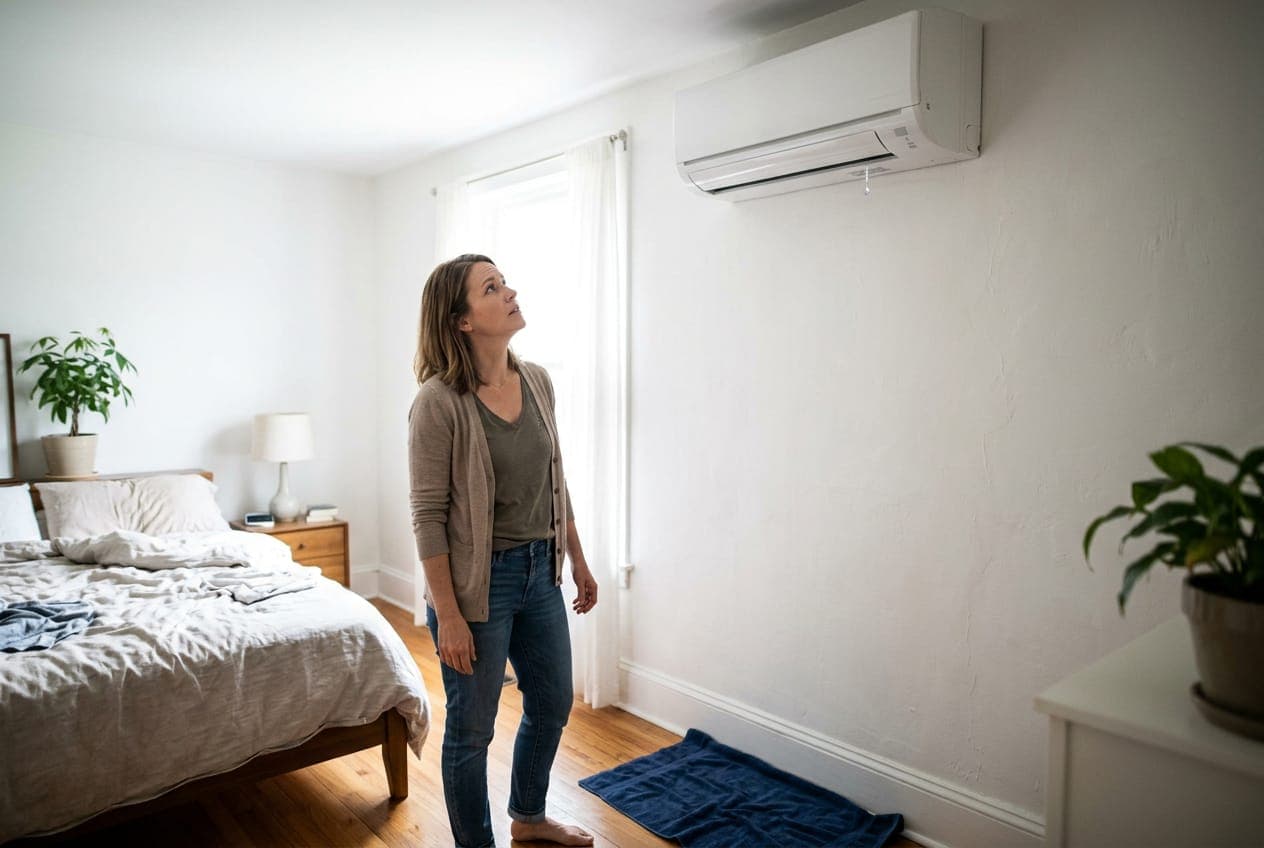
An air conditioner rarely breaks down without warning signs. Before it stops, its behaviour usually changes: a new noise, a smell at start-up, a few drops on the wall, a room that takes longer to cool. These signs are valuable, because they let you act early, before the fault gets worse.
They are not all equally serious. Some can be sorted out in a few minutes, others call for servicing, and others still for a proper repair. Here is how to recognise them, what you can safely check yourself and what is best left to an air-conditioning technician.
Unusual noises
An air conditioner in good condition produces a steady flow of air and, outside, the hum of the compressor and fan. Slight creaks when the temperature changes are normal: the plastic parts expand and contract.
Other noises deserve your attention:
- a clicking or rubbing sound in the indoor unit: often a stuck louvre, a dirty blower wheel or an object that has fallen into the unit;
- a gurgling sound: water draining badly, or sometimes something related to refrigerant flow;
- strong vibration from the outdoor unit: a loose bracket, worn anti-vibration mounts, an unbalanced fan;
- a continuous hissing: it can come from a heavily clogged filter, but also from a circuit fault that needs examining.
A noise that appears suddenly, or that comes with a loss of power, is a reason to switch the unit off and have it diagnosed.
Bad smells
A stale or musty smell at start-up almost always points to a dirty indoor unit: loaded filters, a coil and blower wheel colonised by mould, a condensate tray with standing water. The smell is often stronger after a long period of disuse, or the first time the unit switches to heating mode.
Cleaning the filters sometimes helps, but it is not enough when the source lies deeper. A full clean with disinfection, as part of a service visit, deals with the root of the problem.
A smell of burning or hot plastic is a different matter. Switch the unit off, at the circuit breaker if possible, and call a technician straight away.
Water dripping from the indoor unit
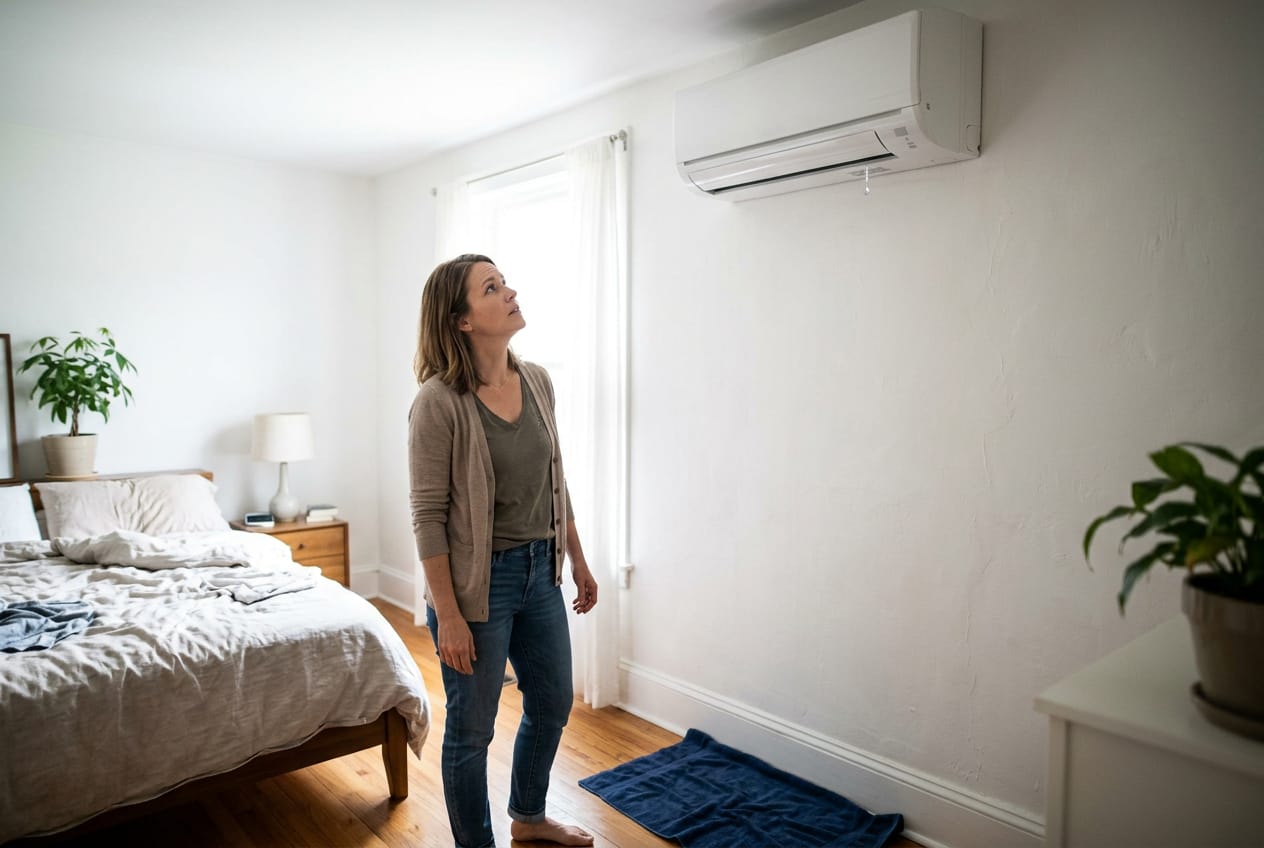
An air conditioner produces water in cooling mode: that is normal, as long as it drains away through the pipe provided, outdoors or into a drain. When water runs down the wall or onto the floor, there are several possible causes:
- the drain pipe is blocked by deposits or dust;
- the condensate pump, if there is one, has stopped working;
- the indoor unit is no longer level;
- the coil freezes and then thaws, often because of clogged filters or low refrigerant.
Whatever the cause, do not let the water keep running: it damages walls and furniture and encourages mould. If the air in the room still feels damp, check the humidity level; a dehumidifier can help while you wait for the visit, without treating the cause.
Frost and loss of power
Frost on the pipes or on the indoor unit's coil in cooling mode is not normal. It usually indicates insufficient airflow (clogged filters, dirty blower wheel) or a lack of refrigerant. A circuit in good condition does not lose refrigerant, though: if some is missing, there is a leak to find and repair before any recharge. Only a technician holding the refrigerant handling certificate (attestation de capacité) is allowed to work on this circuit.
In heating mode, on the other hand, frost on the outdoor unit is normal in cold, damp weather: the unit melts it during defrost cycles.
Loss of power shows up in use: the room no longer reaches the set temperature, the unit runs non-stop, the air coming out feels lukewarm. To put a figure on that impression, a probe thermometer held in front of the air outlet, then in front of the inlet, gives a first idea of the difference. Write the values down: they will help the technician.
What you can check yourself
Before calling, a few simple checks resolve some situations, or at least narrow down the diagnosis.
| Sign | Check yourself | A job for the technician if… |
|---|---|---|
| The unit will not start | Remote control batteries, circuit breaker, selected mode | The breaker trips or an error code appears |
| Weak airflow | Clean filters, furniture or curtain in front of the unit | Airflow stays weak with clean filters |
| Musty smell | Filter cleaning | The smell persists after cleaning |
| Dripping water | Outdoor end of the drain pipe is clear | Water keeps running or the pump no longer starts |
| Room cools poorly | Windows closed, correct set point and mode | The air stays lukewarm or frost appears |
| Noise or vibration outside | Objects against the unit, leaves in the grille | The noise persists or gets worse |
Do not open the casing, dismantle the outdoor unit or use a sharp object to clear the drain. The electrical and refrigerant circuits must be handled by a professional, for your safety as well as the unit's.
Servicing or repair: how to decide
The dividing line is fairly simple:
- Servicing is right when the unit works but shows signs of dirt build-up: a smell, reduced airflow, small drips from a slow drain, a last service more than a year ago. The visit includes cleaning, disinfection, a drain check and readings. To see in detail what it covers, read our article on what the technician checks during annual servicing.
- A repair is needed when the unit no longer starts, shows an error code, leaks heavily, ices up, trips the electrics or gives off a burning smell.
For servicing, our air conditioner servicing and cleaning can be booked online at an upfront price. For a breakdown, our air conditioner repair service usually visits within 24 to 72 hours depending on the season and the area, in your home or your shop, anywhere in Île-de-France.
Have you noticed one of these signs and are not sure what it means? Describe it to us via the contact page: we will point you to the right type of visit and send you a free quote within 48 working hours.
Ready for cooler, healthier air?